Introduction
Discover how Sustainable Business Strategy, ESG Strategy Training, Corporate Sustainability Solutions, and Community-Led Growth help organizations build resilience, improve governance, and achieve long-term business success.
Organizations today operate in an increasingly complex business environment where long-term success depends on balancing economic growth with environmental responsibility and social impact. A well-defined Sustainable Business Strategy enables businesses to remain competitive while creating lasting value for customers, employees, investors, and communities.
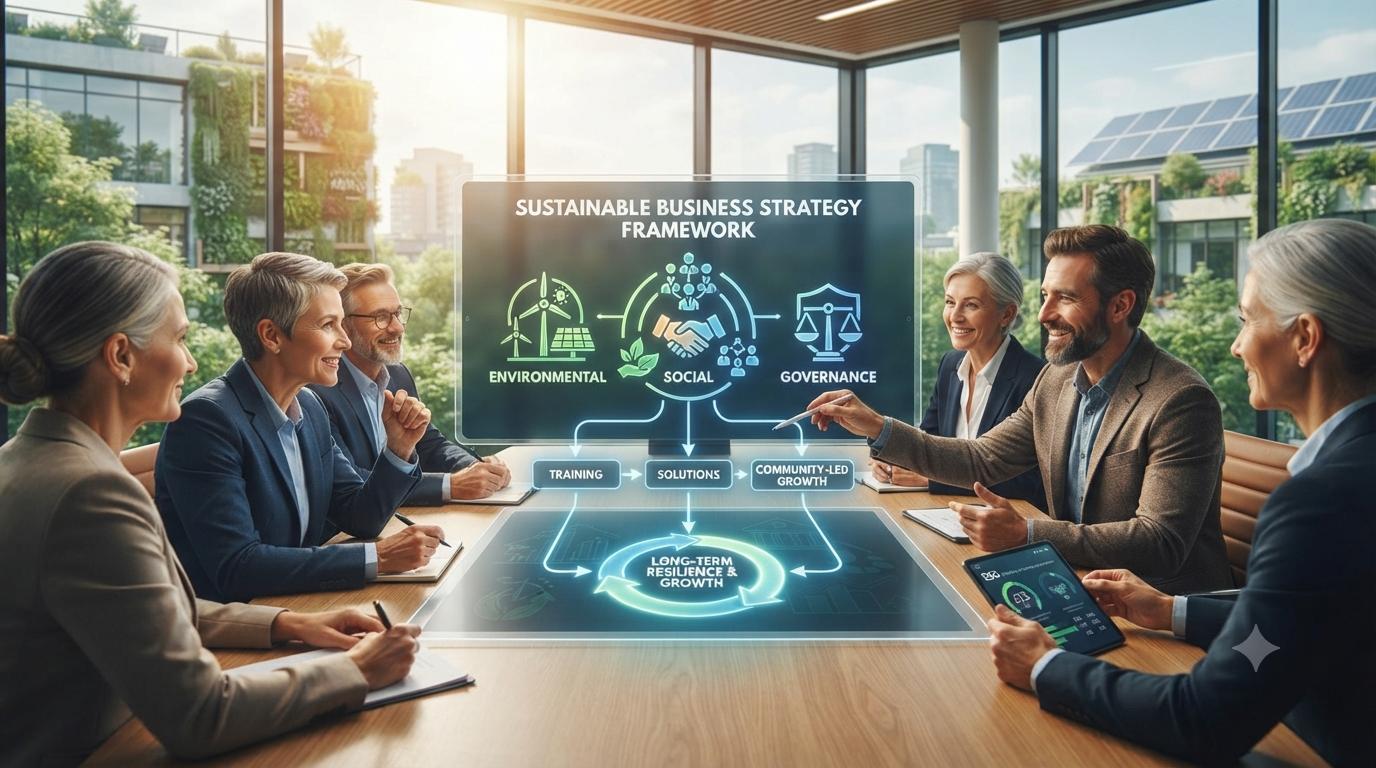
By integrating ESG Strategy Training, implementing Corporate Sustainability Solutions, and embracing Community-Led Growth, organizations can strengthen governance, improve operational resilience, and support sustainable business performance.
What Is a Sustainable Business Strategy?
A Sustainable Business Strategy provides organizations with a structured framework for achieving long-term growth while incorporating Environmental, Social, and Governance (ESG) principles into business operations.
Rather than focusing solely on financial performance, sustainable business strategies encourage responsible decision-making that benefits both the organization and society.
Core Focus Areas:
Long-term environmental and economic sustainability
Ethical leadership and corporate accountability
Efficient resource management
Creating value for customers, employees, and stakeholders
These principles help organizations improve resilience while preparing for future business and regulatory challenges.
The Importance of ESG Strategy Training
ESG Strategy Training equips executives, managers, and employees with the knowledge needed to implement sustainability initiatives across the organization successfully.
Support for Organizations:
Understand ESG principles and reporting standards
Build a culture of sustainability and accountability
Identify environmental and social risks
Support regulatory compliance and responsible governance
Organizations that invest in ESG education are better prepared to adapt to changing regulations, stakeholder expectations, and global sustainability trends.
Corporate Sustainability Solutions for Long-Term Success
Corporate Sustainability Solutions provide organizations with practical approaches to improving operational efficiency while reducing environmental impact.
Included Solutions:
Energy-efficient operations
Resource optimization
Waste reduction and recycling initiatives
Sustainable supply chain management
Carbon footprint reduction strategies
Digital technologies for environmental performance monitoring
Implementing these solutions helps organizations improve efficiency, strengthen their corporate reputation, and build long-term operational resilience.
Community-Led Growth: Creating Shared Value
A Community-Led Growth Strategy places communities at the center of business development by encouraging organizations to collaborate with stakeholders and create shared value.
Approach Components:
Community partnerships
Local employment opportunities
Workforce development
Social investment initiatives
Educational and environmental programs
Transparent stakeholder communication
Organizations that actively involve local communities in decision-making often experience stronger public trust, improved brand loyalty, and more sustainable long-term growth.
Measuring Sustainability Performance
Successful sustainability initiatives require continuous monitoring and evaluation to ensure alignment with organizational goals.
Measurable Objectives and Indicators:
ESG reporting
Sustainability metrics
Environmental impact assessments
Resource efficiency indicators
Employee engagement
Community development outcomes
Continuous performance measurement enables organizations to improve sustainability initiatives while responding to evolving environmental, social, and economic challenges.
Why Sustainable Business Strategy Matters
Sustainability has become a strategic business priority rather than an optional initiative. Organizations that integrate ESG principles, invest in leadership development, implement Corporate Sustainability Solutions, and adopt Community-Led Growth strategies are better positioned to achieve long-term resilience and responsible growth.
These approaches strengthen stakeholder relationships, improve governance, enhance operational performance, and create lasting economic, environmental, and social value.
Conclusion
Organizations that embed sustainability into their business strategy are better equipped to navigate changing market expectations, regulatory requirements, and environmental challenges. By combining Sustainable Business Strategy, ESG Strategy Training, Corporate Sustainability Solutions, and Community-Led Growth, businesses can create sustainable value while driving innovation, resilience, and long-term success.