Sustainable Development Models, Strategic Business Planning, Organizational Growth, and Impact-Driven Strategies: Building Long-Term Sustainable Success
Written by Jayan Selim
In today’s competitive, rapidly changing environment, organizations must balance growth, performance, and long-term sustainability. By adopting Sustainable Development Models, Strategic Business Planning, Organizational Growth Strategies, and Impact-Driven Business Strategies, organizations can create lasting value while responding to economic, environmental, and social challenges.
These interconnected approaches help organizations improve performance, manage resources responsibly, encourage innovation, and build resilience across different industries.
1. Sustainable Development Models and Strategic Business Planning
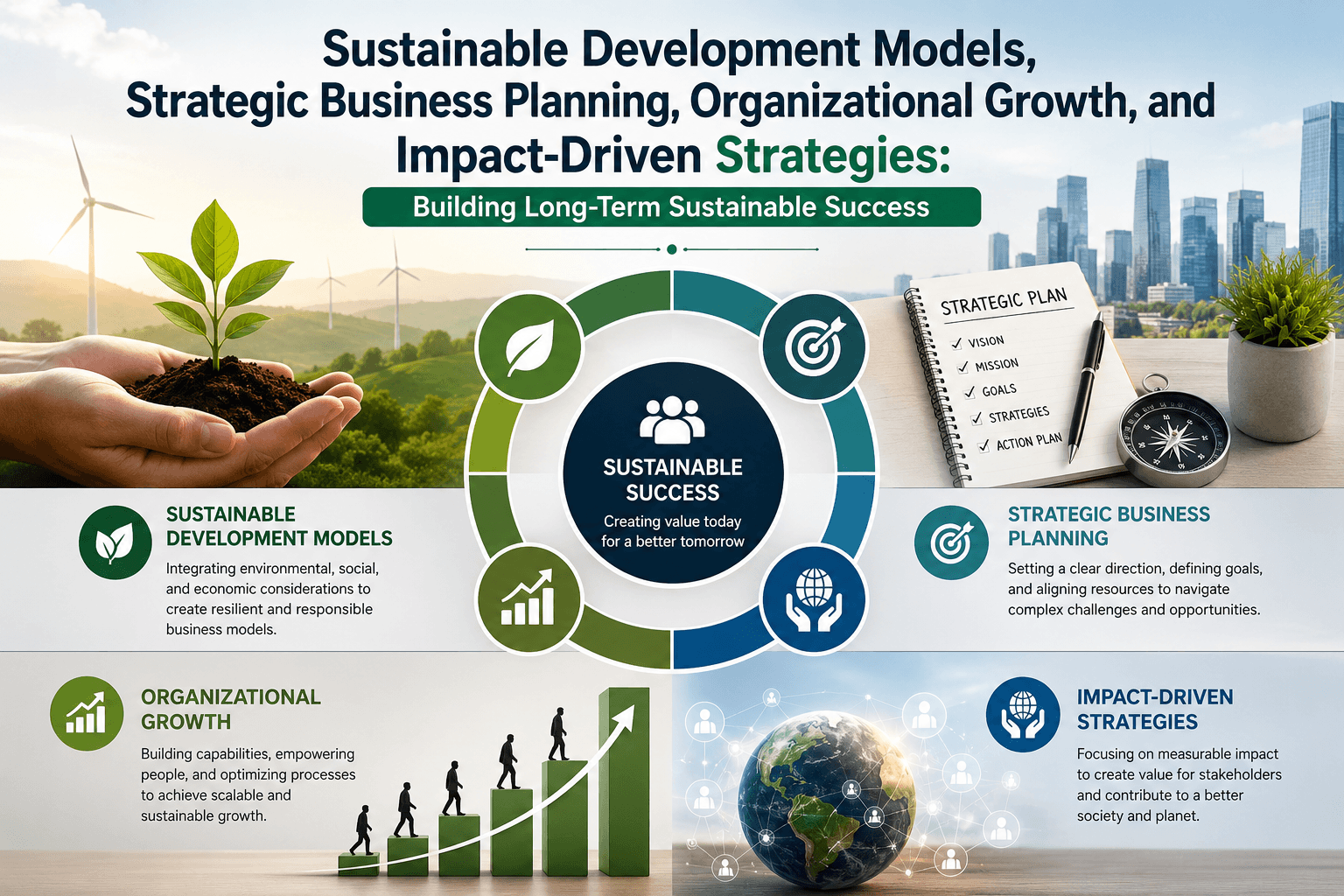
Organizations require clear direction to achieve sustainable growth and remain resilient in dynamic environments. Sustainable Development Models provide frameworks that encourage responsible resource management, innovation, environmental responsibility, and long-term value creation.
Meanwhile, Strategic Business Planning establishes a structured roadmap that aligns organizational objectives with future opportunities and potential challenges.
Sustainable Development Models
These models promote responsible decision-making by emphasizing:
- Efficient use of organizational resources
- Environmental and social responsibility
- Long-term economic sustainability
- Continuous improvement and innovation
Strategic Business Planning
Strategic planning enables organizations to:
- Define measurable objectives
- Allocate resources effectively
- Identify growth opportunities
- Monitor organizational performance and progress
When combined, these approaches create a strong foundation for sustainable organizational development.
2. Organizational Growth Strategy and Impact-Driven Business Strategy
Long-term success depends on an organization’s ability to grow while maintaining its core values and objectives. An effective Organizational Growth Strategy focuses on expanding operational capabilities, entering new markets, strengthening competitiveness, and improving organizational performance.
At the same time, an Impact-Driven Business Strategy ensures that organizational growth creates meaningful economic, social, and environmental value for stakeholders.
Organizations can benefit from integrating these strategies through:
- Aligning growth initiatives with long-term objectives
- Encouraging innovation and continuous development
- Building stronger relationships with customers and stakeholders
- Creating measurable social and economic impact
By combining strategic growth with responsible practices, organizations can balance profitability, sustainability, and positive impact.
3. Achieving Long-Term Organizational Success
Organizations that integrate Sustainable Development Models, Strategic Business Planning, Organizational Growth Strategies, and Impact-Driven Business Strategies are better equipped to navigate changing market conditions and maintain long-term competitiveness.
These integrated approaches can contribute to:
- Stronger organizational resilience
- Better strategic decision-making
- Sustainable financial performance
- Enhanced stakeholder trust
- Continuous innovation and responsible growth
These principles are also relevant across industries such as environmental management, energy, oil and gas, engineering, aviation, telecommunications, infrastructure, and health and safety, where organizations increasingly need to balance operational performance with sustainability and long-term impact.
Organizations that prioritize both growth and positive impact can strengthen their ability to adapt while contributing to broader economic, social, and environmental development.
Written by Jayan Selim.