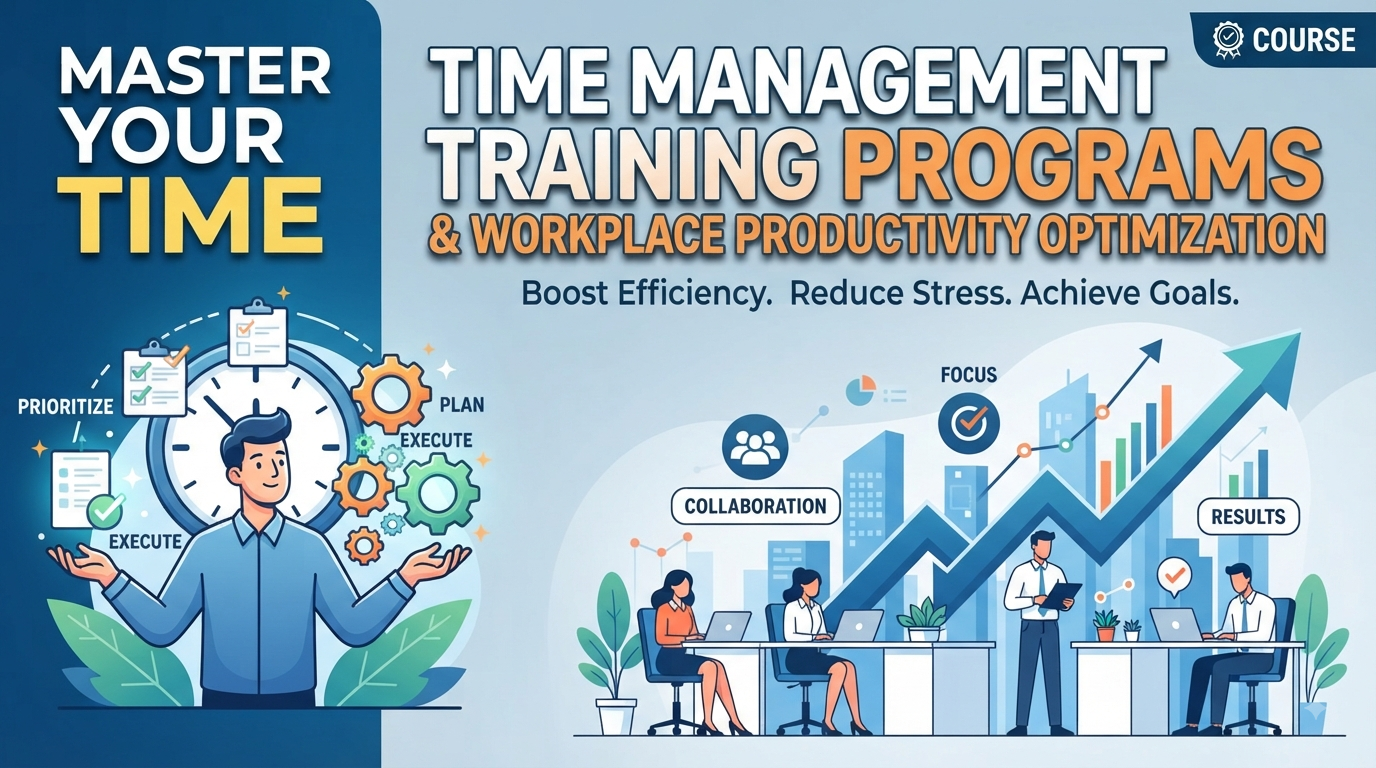
Time Management Training Programs and Workplace Productivity Optimization
In today’s fast-paced professional environment, effective time management is essential to achieving organizational success and improving individual performance. Personal effectiveness courses help employees develop practical skills for organizing tasks, setting priorities, and maximizing productivity. As businesses increasingly focus on workflow streamlining, they are also adopting distraction-free concentration and productivity coaching to reduce distractions, improve performance, and create a more productive workplace culture.
What Are Time Management Training Programs?
- Time Management Training Programs are structured learning initiatives designed to help individuals manage their time more effectively by improving planning, prioritization, and decision-making skills.
- These programs enable employees to complete tasks efficiently while maintaining high-quality performance.
Workplace Productivity Optimization
- Workplace Productivity Optimization involves implementing strategies, technologies, and best practices that improve organizational efficiency and employee performance.
- By optimizing workflows and eliminating unnecessary distractions, businesses can achieve greater operational success and enhance overall productivity.
Key Benefits of Time Management Training Programs
Time management training can help organizations:
- Improve task prioritization and planning
- Reduce workplace stress and missed deadlines
- Enhance employee accountability
- Support better decision-making
- Increase overall organizational efficiency
Organizations that invest in time management education can strengthen employee performance and improve business outcomes.
Focus and Deep Work Techniques
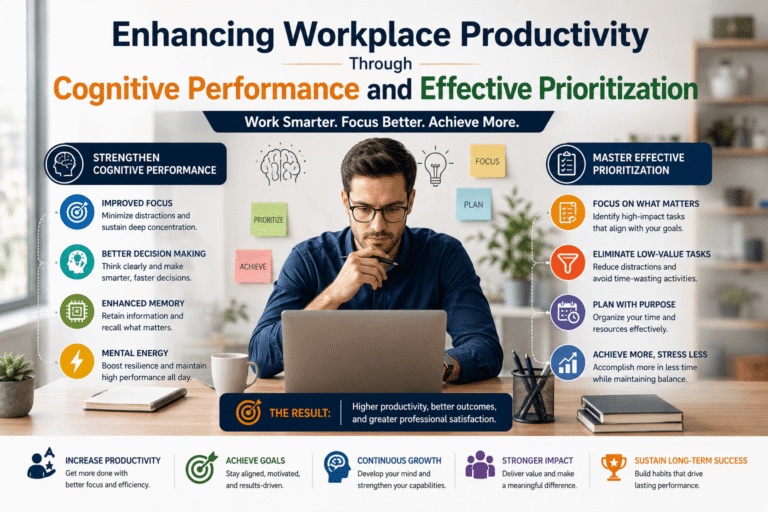
Focus and Deep Work Techniques encourage individuals to dedicate uninterrupted periods of concentration to high-value tasks. These techniques help reduce distractions, strengthen problem-solving abilities, and improve the quality of work produced.
Maintaining focused work periods can be particularly valuable when employees are handling complex responsibilities that require sustained attention.
Applications of Focus and Deep Work Techniques
These techniques can support employees in:
- Completing complex projects without interruptions
- Improving concentration during critical tasks
- Reducing multitasking and mental fatigue
- Enhancing creativity and innovation
- Increasing the quality of decision-making
Personal Efficiency Training
Personal Efficiency Training focuses on developing habits and strategies that enable employees to accomplish more while using their time and resources effectively. It emphasizes continuous improvement, self-discipline, and goal-oriented performance.
Benefits of Personal Efficiency Training
Personal efficiency training can contribute to:
- Better organization of daily responsibilities
- Increased work accuracy
- Improved communication and collaboration
- Higher employee motivation
- Greater work-life balance
By combining deep focus with personal efficiency strategies, organizations can create a workplace where employees consistently perform at their highest potential.
Integrating Productivity Strategies for Long-Term Success
The integration of Time Management Training Programs, Workplace Productivity Optimization, Focus and Deep Work Techniques, and Personal Efficiency Training creates a comprehensive framework for improving both individual and organizational performance.
These approaches help employees manage responsibilities more effectively while enabling businesses to optimize workflows and achieve strategic objectives.
Successful Implementation Requirements
- Ongoing training
- Supportive leadership
- Continuous performance evaluation
- A workplace culture that encourages focused work
- Professional development opportunities
Organizations that prioritize productivity improvement are better equipped to adapt to changing business demands while maintaining sustainable growth.
Why Productivity Improvement Matters
Achieving long-term success requires more than working harder—it requires working smarter. By investing in personal effectiveness courses, organizations empower employees to use their time effectively while supporting workflow streamlining.
When combined with distraction-free concentration and comprehensive productivity coaching, these approaches can help businesses improve productivity, enhance employee satisfaction, and build a high-performing workforce prepared for future challenges.
Conclusion
Effective time management, focused work, and personal efficiency are essential components of a productive workplace. By investing in Time Management Training Programs, Personal Efficiency Training, Focus and Deep Work Techniques, and Workplace Productivity Optimization, organizations can improve employee performance, streamline workflows, and create a culture of sustainable productivity.
Written by Jayan Selim.