Building Sustainable Business Growth
Business Growth Strategy, Long-Term Business Development, and Responsible Business Practices
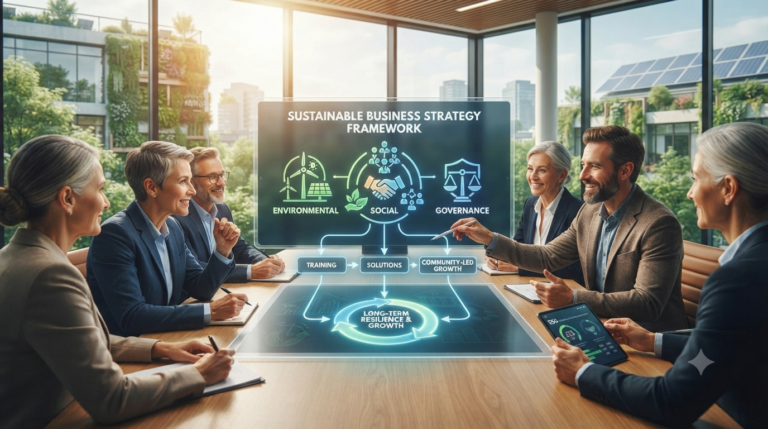
Organizations are increasingly focusing on sustainable expansion, stronger market positioning, and long-term business performance. The integration of Business Growth Strategy, Long-Term Business Development, Responsible Business Practices, and Growth Strategy Consulting creates a structured approach that enables businesses to improve operational performance, strengthen competitiveness, and create lasting value.
1. Understanding Business Growth Strategy and Responsible Business Practices
Business Growth Strategy provides organizations with a structured roadmap for increasing market presence, improving operational performance, and creating competitive advantages. It enables leadership teams to identify priorities, allocate resources effectively, and respond to changing market opportunities.
At the same time, Responsible Business Practices ensure that business growth is achieved through ethical decision-making, transparency, and accountability toward customers, employees, investors, and the wider community.
Together, these approaches help organizations:
- ✔ Define long-term business objectives
- ✔ Identify new expansion opportunities
- ✔ Improve operational performance
- ✔ Strengthen competitive positioning
- ✔ Monitor organizational progress
By combining business growth planning with responsible practices, organizations can pursue expansion while maintaining sustainable operations and aligning growth with organizational values.
2. Long-Term Business Development and Growth Strategy Consulting
Long-Term Business Development goes beyond immediate financial goals. It focuses on creating lasting relationships, expanding organizational capabilities, and preparing businesses for future opportunities.
Organizations that prioritize long-term development typically invest in innovation, workforce development, customer engagement, and strategic partnerships rather than relying solely on short-term gains.
Key Components of Long-Term Business Development
An effective Long-Term Business Development framework typically includes:
- 📊 Market research and opportunity analysis
- 🤝 Customer relationship development
- 💡 Innovation and service improvement
- 🚀 Investment in employee skills and leadership
Rather than simply reacting to market changes, organizations with strong development strategies can anticipate trends and position themselves for sustainable growth.
The Role of Growth Strategy Consulting
Many organizations rely on Growth Strategy Consulting to evaluate existing business models and identify practical opportunities for expansion. Consultants provide independent insights that can help businesses improve decision-making, reduce operational risks, and develop customized strategies aligned with long-term objectives.
Growth strategy consultants often assist organizations with:
- 🔍 Assessing market opportunities
- 📈 Improving strategic planning processes
- ⚙️ Identifying operational efficiencies
- 🔄 Supporting organizational transformation
- 🏗️ Developing scalable business models
This strategic approach helps organizations identify opportunities for growth while building capabilities that support long-term performance.
3. Business Performance, Strategic Planning, and Sustainable Growth
Strong organizations understand that achieving consistent results requires more than setting ambitious goals. A successful Business Growth Strategy must be supported by effective strategic planning, responsible resource management, and continuous performance evaluation.
By integrating Long-Term Business Development with Responsible Business Practices, businesses can improve efficiency while maintaining sustainable operations and responding effectively to changing market conditions.
The Role of Strategic Planning
Strategic Planning provides a structured approach to achieving organizational objectives. It enables businesses to allocate resources efficiently, respond to market changes, manage risks, and maintain a competitive advantage.
Successful strategic planning includes:
- 🎯 Establishing measurable business objectives
- 📈 Monitoring organizational performance
- 💼 Allocating financial and operational resources effectively
- 🛡️ Managing business risks proactively
When strategic planning, responsible leadership, and continuous improvement work together, organizations are better positioned to achieve sustainable growth and long-term competitive success.
Conclusion
Long-term organizational success depends on combining a clear Business Growth Strategy with effective Long-Term Business Development, Responsible Business Practices, and Growth Strategy Consulting. Together, these approaches enable businesses to improve operational performance, strengthen stakeholder relationships, and adapt to changing market conditions.
By focusing on strategic planning, continuous improvement, responsible leadership, and sustainable expansion, organizations can strengthen their competitive position and create lasting business value.